
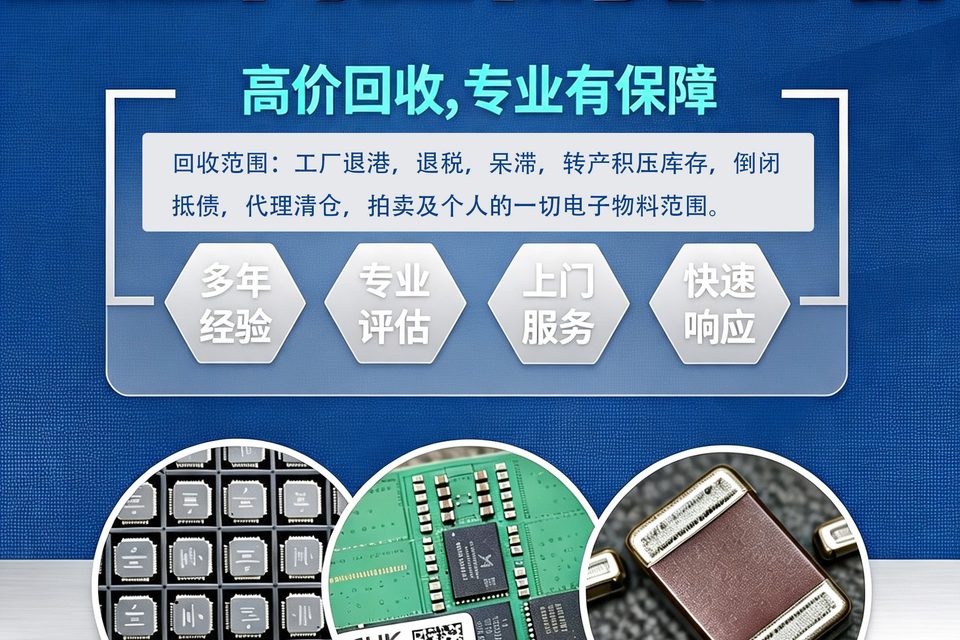
Core Objectives of IC Inventory Recovery
IC inventory recovery is not simply clearing out the warehouse, but rather reassessing and disposing of integrated circuit materials that have become idle, unused, expired, or obsolete due to project cancellations. For procurement and inventory management personnel, the core objectives are to clarify inventory status, reduce warehouse occupancy, identify usable value, and complete subsequent processing under compliance prerequisites.
Which IC Inventories Are Suitable for Recovery Assessment
Generally, enterprises may include the following types of IC inventory in the assessment scope:
- Components remaining after project termination or design changes.
- Idle materials formed by procurement quantities exceeding actual demand.
- Materials that have remained unused in the warehouse for a long time and are near or past their shelf life.
- Customer returns, samples, loose materials, or ICs that have been opened but not used.
- Inventory requiring reconfirmation due to incomplete packaging, labels, or batch information.
Common Assessable Material Types
- Common ICs such as MCUs, memory devices, interface chips, and power management chips.
- Materials in complete packaging, including tape and reel, trays, tubes, or bulk.
- Inventory with clear part numbers, brands, batches, and quantities.
- Electronic components with traceable sources and relatively clear appearance conditions.
Preparation Work Before Inventory Recovery
- Organize part number information: Provide complete part numbers, package types, brands, batch numbers, and quantities whenever possible.
- Verify physical condition: Confirm whether items are original, opened, moisture-exposed, oxidized, or have damaged pins.
- Separate inventory categories: Store new unopened items, loose materials, returns, items pending inspection, and defective materials separately.
Main Factors Affecting Recovery Assessment
- Part number commonality: General-purpose ICs are usually easier to enter subsequent circulation or reuse than highly customized or obscure part numbers.
- Appearance and packaging: Complete packaging, clear labels, and good appearance help improve assessment efficiency.
- Batch and date: Production date, batch consistency, and storage time affect subsequent judgments.
- Storage conditions: Temperature and humidity control, anti-static measures, and moisture management are important references.
- Quantity and completeness: Materials in full reels, full boxes, or concentrated quantities are usually easier to handle than scattered materials.
How to Establish a Reliable Recovery Process
- Establish an inventory list: Register items by part number, brand, package, quantity, and batch.
- Initial screening and classification: First distinguish assessable, pending confirmation, scrap, and materials requiring technical testing.
- Submit assessment materials: Provide the list, photos, label information, and inventory status description to the recovery party.
- Confirm disposal method: Based on assessment results, choose resale, consignment, return, disassembly for reuse, or environmentally compliant scrapping.
Recommendations for Procurement and Inventory Management Personnel
The key to IC inventory recovery is not temporary clearance, but establishing a long-term executable inventory governance mechanism. It is recommended that enterprises periodically check idle materials, standardize warehousing and label management, and consider material reusability in advance during project initiation, purchase ordering, and design change stages. This can reduce inventory backlog and improve efficiency in subsequent recovery assessments.